
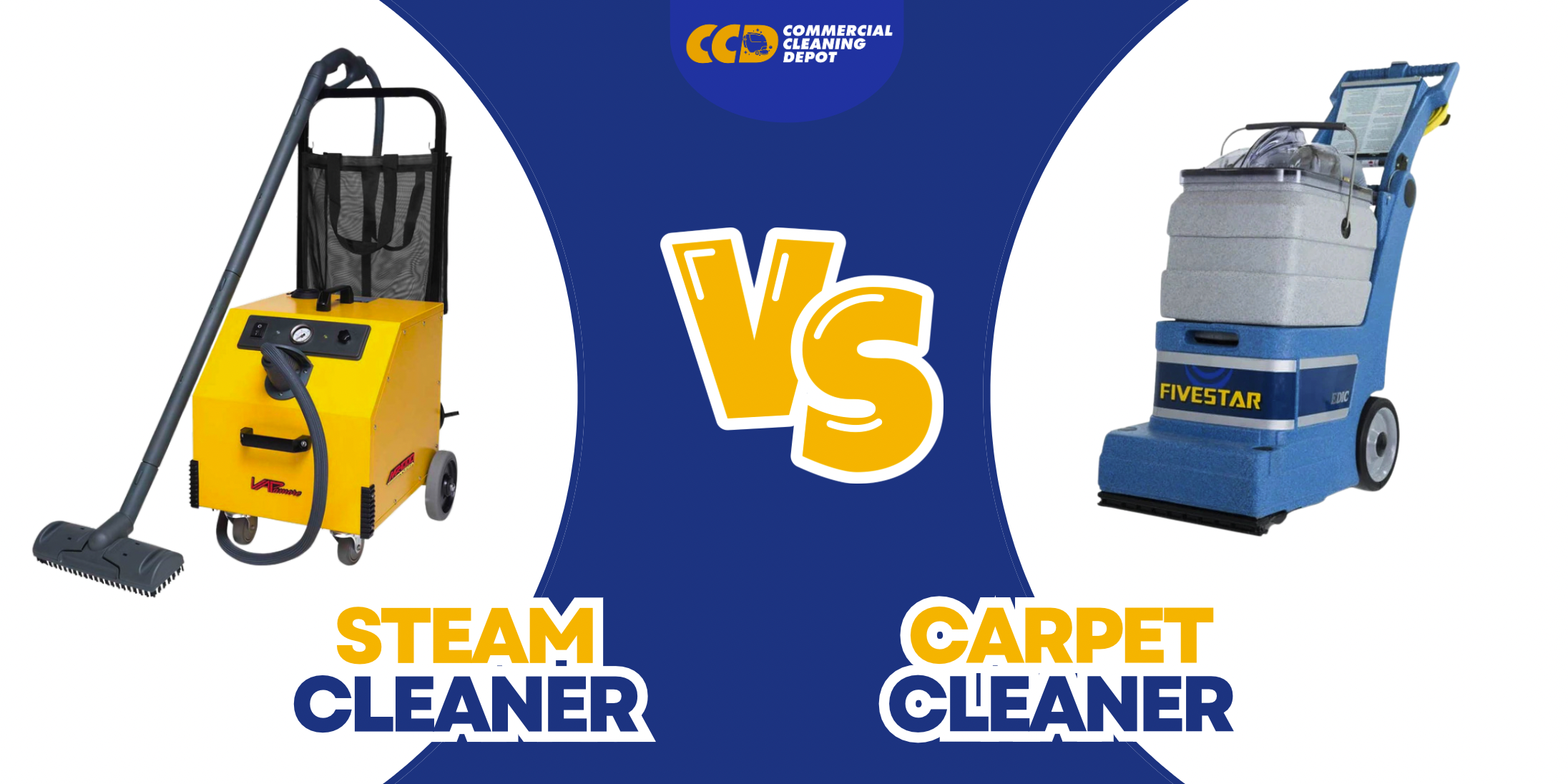
You're staring at a carpet that smells like your dog, looks like a mudslide, and hasn't had a proper clean in months. You know you need a machine, but should you grab a steam cleaner or a carpet cleaner? They're not the same thing, and picking the wrong one means either underwhelming results or a carpet that takes two days to dry.
This guide breaks down how each machine works, where each one wins, and how to decide which belongs in your cleaning setup.
Key Takeaways
- Steam cleaners sanitize with hot vapor, while carpet cleaners use solutions and suction for deep cleaning
- Carpet cleaners are more effective for removing tough stains and deep-set dirt
- Steam cleaners are faster to set up and leave carpets drier, quicker
- Your choice depends on cleaning frequency, carpet type, and the specific problem you're solving
Understanding Steam Cleaners and Carpet Cleaners
Steam cleaners and carpet cleaners are two different tools for cleaning floors and carpets. They work in unique ways and have specific strengths. Understanding the difference before you buy saves you time, money, and frustration on the job.
What is a Steam Cleaner?
Steam cleaners use hot water vapor to clean surfaces. They heat water to create steam, which is then applied to the area being cleaned. The high heat kills germs and bacteria without chemicals. Steam cleaners can clean many surfaces, such as floors, counters, and upholstery.
Types of Steam Cleaners
There are different types of steam cleaners. Each one serves different cleaning needs, depending on surface type, cleaning depth, and drying time requirements:
i. Handheld steam cleaners

Handheld steam cleaners are compact, portable devices designed for quick spot cleaning. They suit smaller tasks such as grout lines, sinks, kitchen surfaces, and tight corners where larger machines cannot reach.
Hand held steam cleaners are the right tool when you need to address a specific spot, clean a tight area, or move quickly between small tasks. Their small water tank limits run time, so they're better for targeted cleaning than sustained large-area work.
ii. Canister steam cleaners
Canister steam cleaners are larger wheeled units designed for more demanding cleaning jobs. They're designed for whole-building use and typically come with a range of attachments — floor heads, upholstery nozzles, detail brushes — that allow a single machine to handle multiple surfaces in one cleaning session. This makes them suitable for whole-home cleaning, including floors, appliances, and upholstery.
iii. Steam mops
Steam mops are upright machines designed specifically for sealed hard floors such as tile, laminate, and hardwood. They offer fast floor cleaning with a simple push-and-pull operation for routine maintenance. They're built primarily for hard floors like tile, hardwood, and laminate. While some can be used on low-pile carpet, they lack the steam pressure and dwell time that dedicated carpet steam cleaners provide, so they're better suited as hard-floor tools.
iv. Dry vapor steam cleaners

Therma-Steem .75 Model Dry Vapor Steam Cleaner
Dry vapor steam cleaners produce very low-moisture steam that leaves surfaces almost dry after cleaning. The result is that surfaces cleaned with dry vapor are nearly dry within minutes of cleaning. This makes them valuable in healthcare settings, food service environments, and anywhere that standing moisture creates a slip or mold risk.
v. Vacuum steam cleaners

Vacuum steam cleaners combine steam cleaning with suction in a single unit. This combination allows for dirt and moisture removal in a single pass, which makes it effective for deep-cleaning carpets, rugs, and upholstered furniture.
As the steam loosens soil from carpet fibers, the vacuum simultaneously pulls it up, eliminating the need to wait for loosened debris to be addressed separately. This combination is most effective on upholstery and medium-pile carpet where steam alone would leave loosened dirt behind.
Pros:
Commercial steam cleaners bring a lot to the table, especially for facilities that clean frequently across multiple surface types:
- No chemicals needed. Under proper commercial use conditions, steam cleaners can eliminate 99.99% of common bacteria and enveloped viruses on hard surfaces. This makes it safe choice for spaces with children, chemically sensitive occupants, or strict hygiene requirements.
- Works on more than just carpet. Tile, hardwood, upholstery, kitchen equipment, grout — one machine with the right attachments handles all of it.
- Faster dry times. Because steam uses far less water than a carpet extractor, surfaces dry in 30 minutes to two hours rather than most of the day.
- Lower operating costs. Water is the only consumable. No cleaning solution to buy, store, or mix.
- Easier to move around. Steam cleaners are lighter and more maneuverable than commercial extractors, which matters when you're working across multiple rooms or floors.
Cons:
- Not effective on heavily soiled or deeply stained carpet. It can loosen surface grime but won't pull out embedded soil the way extraction does
- Requires careful temperature management on delicate materials like wool and silk
- Commercial-grade units with strong steam output are more expensive than basic extractors
What is a Carpet Cleaner?
Carpet cleaners, also called carpet extractors, work differently. They spray a mix of water and cleaning solution deep into the carpet fibers, then use mechanical agitation (rotating brushes) to work that solution through the pile. Then, a powerful suction system pulls the dirty water back up into a recovery tank. This combination of chemical action and mechanical scrubbing lifts dirt, stains, and residue that vacuum cleaners and steam alone can't reach.
Types of Carpet Cleaners
Carpet cleaners also come in several formats, and the differences between them are significant for commercial operations.
i. Upright carpet cleaners:
Upright carpet cleaners are full-size machines with a footprint similar to a standard upright vacuum. They're designed for large carpeted areas and work well for routine deep-cleaning of open floor plans — offices, hotel rooms, retail spaces. Most have built-in solution tanks and recovery tanks and are pushed in a forward-and-back pattern across the carpet.
ii. Portable spot cleaners:

Sandia 3-Gallon 50-1000 Series Spot Extractor Kit
Portable spot cleaners are compact extractors built for targeted spills and stains rather than full-area cleaning. They're fast to set up, easy to carry between rooms, and effective for addressing accidents before they set. A spot extractor won't replace a full carpet extraction cycle, but it's the right first response to a fresh stain — the sooner you extract, the less likely it is to become a permanent problem.
iii. Commercial box carpet extractors:

EDIC Galaxy 2000SX-HR 12 Gallon Box Carpet Extractor
Commercial box carpet extractors are heavy-duty machines built for professional use. They carry larger solution and recovery tanks than upright models, which means fewer refill and dump cycles during a cleaning session. They're designed for commercial use in places such as hotels, hospitals, schools, and facilities where carpet cleaning is a regular part of operations.
iv. Heated carpet extractors:

EDIC 539BX-EH Galaxy 5 Heated Portable Carpet & Upholstery Extractor
Heated carpet extractors delivers hot water to the carpet rather than cold or room-temperature solution. The hot water dissolves grease and breaks down protein-based stains more effectively than cold water alone. For heavily soiled commercial carpet, a heated extractor outperforms a cold-water unit on the same pass.
v. Walk-behind carpet extractors

EDIC Polaris 801PS 8 Gallon Self-Contained Carpet Extractor
Walk-behind carpet extractors are larger self-propelled or operator-guided units designed for high-volume carpet cleaning. They cover ground faster than upright models and are built for facilities where large carpeted areas such as event venues, convention centers, large hotels, need to be cleaned efficiently between uses.
Pros
Carpet cleaners are built specifically for the jobs where steam falls short:
- Pulls out deep-set soil. Detergent chemistry combined with mechanical agitation and strong suction reaches grime that's worked its way down to the base of the pile.
- Handles tough stains. Set-in food, grease, coffee, and pet accidents can be removed by extraction.
- Restores carpet appearance. A carpet that looks matted, dull, or worn often just needs a proper extraction cycle. It's one of the few things that can bring an aging carpet back.
- Specialized attachments available. Most commercial extractors support tools for upholstery, stairs, and tight edge cleaning, not just open floor areas.
Cons
- Uses more water, which means drying times of four to eight hours depending on airflow
- Improperly dried carpet can develop mold or mildew if airflow isn't managed
- Not a substitute for daily vacuuming

Difference Between Carpet Cleaner and Steam Cleaner
Each machine takes a different approach to removing dirt, stains, and allergens from carpet fibers. Here's how they actually work:
The Cleaning Process
Steam cleaners and carpet cleaners use different methods to clean carpets:
Steam Cleaner
Steam cleaning starts with heating water to create high-temperature vapor.The process starts with heating water to create steam, which is applied to the carpet surface under pressure.
The high temperature loosens dirt and grime and kills many types of bacteria and dust mites. Most carpet-safe steam cleaners operate at 200°F to 300°F (93°C to 121°C) at the nozzle. This temperature is hot enough to kill dust mites (which die at 130°F/54°C) and denature common bacteria, without scorching synthetic carpet fibers.
After applying steam, the machine uses suction to remove loosened dirt and moisture. Drying time is usually shorter than with carpet cleaning.
However, not all steam cleaners work equally well on carpet. A basic steam mop applies steam only to the surface layer, which limits its cleaning depth. A steam cleaner equipped with a carpet glider attachment allows steam to penetrate deeper into the carpet pile, which improves dirt and allergen removal.
Steam cleaning is gentle on carpet fibers and a solid choice for regular maintenance. However, it may not be as effective on deep-set stains. If you're considering professional options, learn more about how commercial steam cleaners work.
Carpet Cleaner
Carpet cleaning begins by applying a water-and-detergent solution to the carpet. A cleaning solution is applied to the carpet to break down dirt and stains. Then rotating brushes scrub the fibers, driving the solution deep into the pile and lifting debris from the base.
Strong suction then extracts the dirty water and cleaning solution. This hot water extraction process removes a significant amount of dirt and stains - more than steam alone on heavily soiled carpet.
Carpet cleaning uses more water than steam cleaning, which means longer drying times. But for tough stains and deep-set dirt, it's the more effective method.
Verdict:
For routine carpet maintenance and quick-turnaround cleaning, steam is the more practical process. For deep removal of embedded soil and stains, carpet extraction gets better results.
Effectiveness Against Stains and Germs
Steam Cleaner
Steam cleaners have a clear advantage when it comes to killing germs. The high-temperature vapor, especially, from commercial-grade units, reaches temperatures capable of destroying most bacteria, viruses, and dust mites without any chemical disinfectant. This makes steam cleaning a practical choice for healthcare facilities, schools, childcare centers, and any environment where chemical use is a concern.
Carpet Cleaner
Carpet cleaners use detergent solutions that can include disinfecting agents, but the germ-killing performance depends on the specific product, dwell time, and temperature. They clean effectively, but they don't match the outright sanitizing power of high-heat steam.
For stain removal, carpet cleaners have the advantage. The combination of cleaning solution, agitation, and strong suction lifts dirt, pet accidents, mud, food spills, and deep-set stains from the carpet fibers. Steam can help loosen surface dirt, but a dedicated carpet cleaner is generally more effective when the goal is to remove visible stains and restore the carpet's appearance.
Verdict:
Steam wins on sanitization while carpet cleaners are best for stain removal. If germ control is the primary concern, use steam. If the carpet has visible staining or heavy soiling, use an extractor.
Suitability for Different Types of Carpets and Rugs
The material and construction of your carpet matters as much as the cleaning method:
Steam Cleaners:
Steam cleaners perform well on synthetic carpets, including nylon, polyester, and olefin handle high-temperature vapor without issue. These materials don't absorb moisture deeply, so the steam lifts surface soil and dries relatively quickly.
For natural fiber rugs such as wool, silk, jute, sisal, steam requires more caution. Wool and silk can be damaged by aggressive heat application. The fibers can shrink, felt, or lose their texture if the steam temperature is too high or the dwell time too long. If you're working on natural fibers with a steam cleaner, use the lowest effective temperature setting and keep the nozzle moving rather than holding it stationary.
Carpet Cleaners:
Carpet extractors are best for synthetic dense-pile commercial carpet, where the cleaning solution can penetrate, agitate, and be extracted without causing fiber damage. Nylon carpet in particular responds well to hot water extraction because the fiber is durable, tolerates detergent chemistry, and dries without distortion. If you're running a cleaning business or managing a facility with wall-to-wall commercial carpet, extraction is the standard approach.
For natural fiber rugs, carpet cleaners require the same caution as steam cleaners, but for a different reason. The risk isn't heat — it's moisture volume. Jute and sisal absorb water quickly and release it slowly. Over-wetting these materials causes them to shrink and can permanently distort the weave. If you need to extract a natural fiber rug:
- Use the minimum solution possible
- Extract thoroughly
- Use air movers immediately to accelerate drying.
A heated carpet extractor can help clean the carpets more efficiently at lower volume.
Verdict:
Synthetic carpet can go either way. You can pick based on how dirty it is. For natural fiber rugs, dry vapor steam is the lowest-risk option. Heavy moisture from either machine can cause problems with jute, sisal, and similar materials.
Cost Comparison
Steam Cleaners:
Commercial steam cleaners span a wide price range depending on steam pressure, boiler size, and intended use:
- Entry-level commercial units – Machines like the Vapamore MR-1000 Forza sit at the more accessible end of the commercial range and are a solid starting point for smaller operations or facilities.
- Mid-range commercial units ($3,000–$8,000) — Units in this bracket, including models from US Steam, deliver the steam pressure, tank capacity, and continuous-fill capability needed for daily commercial use in restaurants, medical offices, and mid-size facilities.
- Industrial-grade units (above $8,000) — Machines like the Therma-Kleen XL3 and Therma-Kleen Ultra 600E are built for manufacturing plants, food processing facilities, and operations running continuous cleaning shifts. The XL3 runs 155 PSI dry vapor at 97% dryness, while the Ultra 600E delivers up to 600 PSI.
Running costs: Water is the only consumable.
Carpet Extractors:
Commercial carpet extractors have a lower entry point than steam cleaners:
- Entry-level commercial ($1,300–$1,700) — These machines are designed for smaller carpeted areas and routine maintenance. They're a good fit for businesses that only need periodic deep cleaning rather than high-pressure extraction every day. The Namco Scooter Cub and Namco Scooter Husky are strong options in this price range.
- Mid-range commercial ($2,000–$3,500) — This is where you find the machines most cleaning contractors and facility managers use. Models like the Sandia Sniper 12-Gallon series (starting around $2,359) and the EDIC Galaxy Pro ($3,138) offer dual-stage vacuum motors, adjustable pump pressures from 100 to 500 PSI, and optional heat.
- Heavy-duty commercial ($4,000+) — Machines in this category are intended for high-volume operations where carpet extraction is part of the daily workflow. For example, the Namco Scooter Beast ($4,495) delivers 400 PSI of pump pressure and larger tank capacities.
Running costs: You need to purchase a cleaning solution. The more frequently the machine is used, the more solution you’ll need to purchase.
Verdict:
Carpet extractors have the lower entry price, but steam cleaners carry lower operating costs over time. If you clean frequently across multiple surfaces, a steam cleaner is the best to go for as there are no recurring chemical purchases.
Ease of Use and Maintenance
Steam Cleaners:
Steam cleaners are easy to operate. They require only water, heat up quickly, and are easy to move between rooms. Post-use maintenance is equally minimal. All you need to do is:
- Empty the water tank
- Wipe down nozzles
- Descale the boiler periodically depending on your water hardness.
Carpet Cleaners:
Carpet cleaners have a higher operational complexity. Setup involves filling the solution tank, mixing detergent at the right concentration, and positioning the machine correctly. After use, both the clean-water tank and recovery tank need to be emptied and rinsed. Brushes and filters also need regular inspection and cleaning to prevent buildup that reduces suction performance.
Verdict:
Steam cleaners are easier to operate and maintain, particularly for staff who aren't trained equipment technicians. Carpet extractors have a steeper learning curve but become routine once operators understand tank management and brush care.
Which is Better for Pet Odors and Allergens?
Steam cleaners is more effecctove for allergens such as pet dander, dust mites, pollen. The heat kills dust mites and denatures the proteins in pet dander that trigger allergic reactions.
For pet odors, especially urine, go for carpet cleaners. Urine contains uric acid crystals that bond to carpet fibers and produce odor as humidity fluctuates. The steam can temporarily reduce the smell by killing surface bacteria, but it won't break down and remove the uric acid salts causing the underlying odor.
For larger accidents or older contamination, a walk-behind carpet extractor with a strong solution can address the whole affected area systematically.
When to Use a Steam Cleaner
Steam cleaning is the right call when:
- You need quick sanitizing without a long dry time. If a space needs to be back in use within an hour or two, steam is the faster option. A steam cleaner applied to lightly soiled carpet can be dry within 30–60 minutes, compared to several hours with wet extraction.
- You're dealing with allergens, bacteria, or odors rather than deep-set stains. Steam's heat penetrates carpet fibers and kills biological contaminants that chemical cleaners sometimes miss or leave behind.
- You want to clean multiple surfaces in one session. A commercial steam cleaner with the right attachments can move from carpet to tile to upholstery to kitchen equipment without switching machines.
- You're doing routine maintenance between deep-cleaning cycles. Steam keeps carpets fresh in between the quarterly or semi-annual deep cleans that carpet extractors handle.
- Chemical-free cleaning is a requirement. Environments like pediatric clinics, organic food production areas, or spaces with chemically sensitive occupants benefit from steam's zero-detergent approach.
When to Use a Carpet Cleaner
A carpet extractor is the better tool when:
- The carpet is heavily soiled or hasn't been deep-cleaned in months. Surface cleaning won't reach the base of the pile where accumulated grime is bonded to fibers. Extraction does.
- You're dealing with set-in stains — food, grease, pet accidents, coffee, or anything that's had time to dry and settle. The combination of detergent and suction is the most effective way to pull these out.
- You're restoring a carpet that's been neglected. A quality carpet extractor can dramatically improve the appearance and texture of carpets that look past their prime.
- High-traffic commercial areas need periodic deep cleaning. Office lobbies, hotel corridors, healthcare waiting rooms, and school hallways accumulate embedded soil that only extraction can address properly.
- You're addressing pet contamination. Urine, in particular, penetrates to the carpet backing and subfloor. A portable spot extractor on fresh accidents and a full carpet extractor for broader contamination gets better results than steam alone.
Conclusion
Stop compromising on your cleaning results. When it comes to professional-grade equipment, the brands matter and so does matching the right machine to the right job.
For advanced carpet cleaning power, professionals rely on EDIC USA for its proven reliability and Sandia Products for tackling demanding commercial applications. Looking for strong performance at a competitive price? Namco Products delivers consistent results for high-frequency cleaning operations.
For steam cleaning, Vapamore offers accessible, high-performance units well-suited to multi-surface commercial cleaning, Therma-Kleen brings industrial-grade steam output for demanding environments, and US Steam rounds out the lineup with commercial-duty machines built for professional use.
Browse our full selection of commercial steam cleaners and carpet extractors, or contact our equipment specialists to talk through the right fit for your facility.
Frequently Asked Questions
Can a steam cleaner replace a carpet cleaner?
For light maintenance and sanitizing, yes. For deep cleaning of heavily soiled carpet or tough stain removal, no. Steam cleaners and carpet cleaners do different jobs and most commercial operations benefit from having access to both.
How long does carpet take to dry after steam cleaning vs carpet cleaning?
Steam cleaning leaves carpets significantly drier because far less water is used. Drying time takes 30 minutes to two hours, depending on the machine and ventilation. Carpet extraction, however, uses considerably more water, so drying times run four to eight hours.
Is steam cleaning safe for all carpet types?
No, steam cleaning isn’t safe for all carpet types. This is because hHigh-temperature steam applied to delicate fibers such as wool, silk, natural fiber rugs can cause damage. Always check manufacturer guidance for your carpet type and use lower temperature settings when in doubt.
Which is better for pet odors — steam cleaner or carpet cleaner?
Carpet cleaners with enzyme-based cleaning solutions are more effective for pet odor elimination. Steam can reduce surface bacteria and temporarily improve smell, but it won't break down the uric acid salts that cause persistent pet odor. Use an enzyme cleaner through a carpet extractor to address the source, then follow up with steam for ongoing allergen control.
Do I need to use cleaning solution with a carpet cleaner?
Most carpet extractors are designed to work with cleaning solution — it's the chemical action combined with suction that makes them effective. However, some machines can run with hot water only for light maintenance or for rinsing after a detergent pass. Always follow the manufacturer's guidance for your specific machine.
How often should commercial carpets be deep cleaned?
It depends on foot traffic and use. Light commercial environments (small offices, low-traffic areas) need deep extraction every 6–12 months. For high-traffic areas such as hotel lobbies, healthcare waiting rooms, school hallways, do the deep cleaning every 1–3 months, with steam maintenance cleaning in between.