
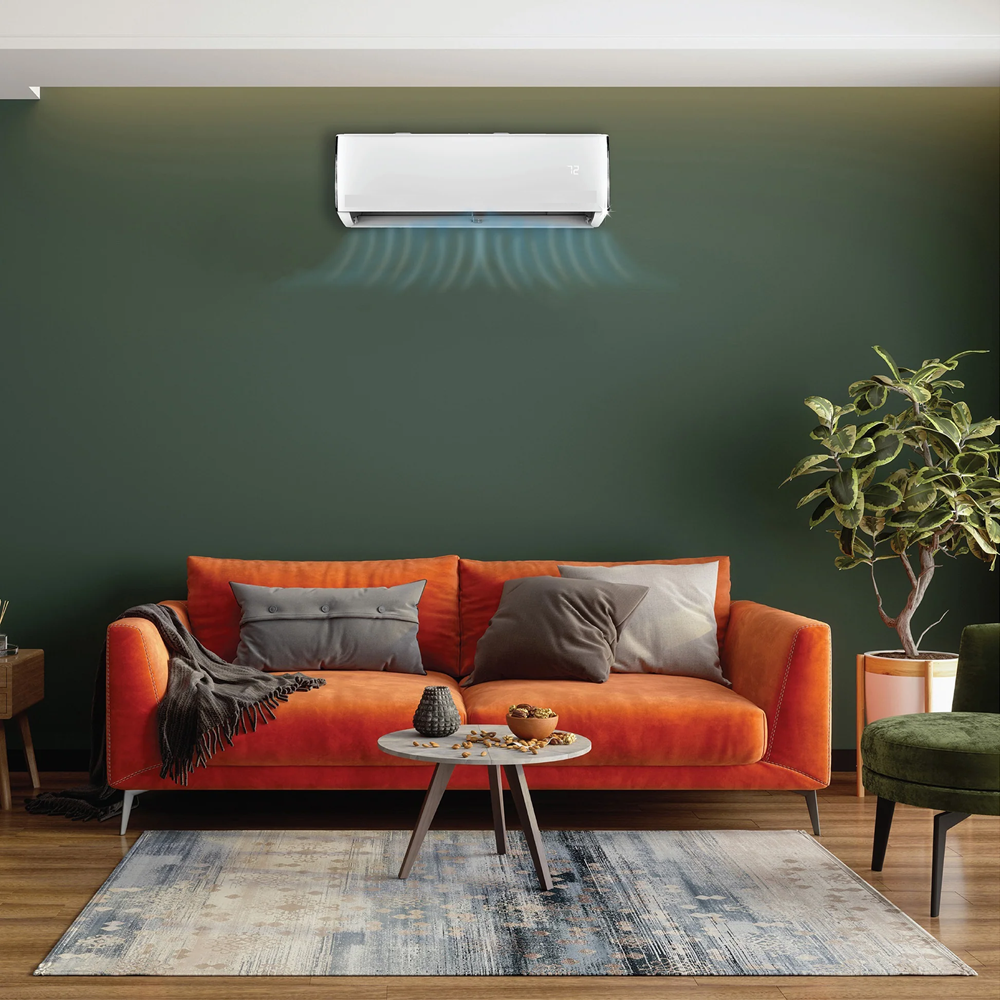
If you're comparing MRCOOL and Pioneer mini splits, you’ve come to the right place. Here’s a quick overview of both brands: MRCOOL wins on installation simplicity with its genuinely tool-free DIY setup, while Pioneer offers more installation flexibility, a broader product lineup, and a lower entry price. The right choice depends on whether you want to do it yourself or hire a pro, how cold your winters get, and how much headache you're willing to put up with during installation.
Overall, both brands sit in the budget-to-mid-range tier and deliver solid performance for homeowners and small business owners who don't want to spend Mitsubishi money. But before you click "add to cart," here's what you actually need to know.
Overview of Pioneer Mini Split

Pioneer is a brand operated by Parker Davis HVAC International, a Florida-based company that's been in the ductless space since 1995. They're widely credited as one of the companies that helped mainstream affordable mini-splits in the U.S. market, and they sell directly to consumers through their own website and authorized retailers.
Where Pioneer Is Made
Pioneer mini splits are manufactured in China. The company is U.S.-based and U.S.-operated, but, like most budget and mid-range mini-splits on the market, the units themselves are produced overseas. Manufacturing in China keeps costs down, which is a big part of why Pioneer units are often priced below comparable MRCOOL models.
Pioneer Range of Products
Pioneer covers a wide range of ductless and ducted configurations. Here's what their current wall-mounted lineup looks like:
Diamante Essenza (17 SEER):
This is Pioneer's entry-level wall-mount. It uses R-32 refrigerant and can be set to heat down to 5°F. Good for mild climates on a tight budget.
Diamante Pro (19–20 SEER)
The Diamante Pro is Pioneer's most popular tier. It uses R-454B refrigerant, heats down to -4°F, and is a solid performer for most U.S. climates. Available in 9,000 to 36,000 BTU.
Quantum Ultra (24 SEER)
This steps up to a more premium efficiency level with built-in WiFi and heating capability down to -13°F. Good fit for moderate-to-cold climates.
Quantum Hyperformance (25 SEER)
This is Pioneer's highest-efficiency single-zone unit. It is Hyper-heat rated to -22°F, built-in WiFi, and Energy Star certified. Best for cold climates where heat pump performance is critical.
Quantum Fresh
This is a newer model that combines mini-split performance with ERV (Energy Recovery Ventilator) technology to draw in fresh, filtered outdoor air.
Beyond wall-mounts, Pioneer also offers ceiling cassettes, floor-mounted units, ceiling-concealed ducted systems, and multi-zone outdoor units that support up to five indoor heads.
Customer Reviews with Pioneer
Pioneer users love the quiet indoor operation, easy installation, and the bang-for-buck value. Swede577, a Reddit user, mentioned in this channel that their mini-splits are "exceptionally reliable if installed properly."
See for yourself:

The most common complaint in reviews involves poor customer service, especially after purchase. They use AI bots, and you may not get help on the spot when you need it. Checkout this user's experience:

SEER Ratings and Energy Efficiency
Pioneer's lineup spans 17 to 25 SEER, depending on the series. Most buyers prefer the Diamante Pro at 19–20 SEER, which qualifies for Energy Star and puts Pioneer in a competitive position for the price point. The Quantum series pushes into the 24–25 SEER range, which is excellent efficiency for a brand in this price tier.
Compressor Technology and Performance
All Pioneer mini splits use DC inverter compressors, which means the compressor doesn't cycle on and off. Instead, it ramps up and down in response to demand. This is the key technology that separates modern mini-splits from old-school window units and translates directly into energy savings and consistent temperatures.
Noise Levels and Comfort Performance
Pioneer indoor units are consistently rated as whisper-quiet, with most models operating between 26 and 42 dB, depending on fan speed. The 12,000 BTU Diamante series unit, for example, is rated at 28 dB on low, which is quieter than a typical library. Outdoor units run at around 49–53 dB, which is comparable to most mini-splits in this class.
Warranty Coverage and Support
Pioneer offers a 5-year parts and compressor warranty on most models, provided you register within 90 days of installation. The warranty applies to both residential and commercial use and covers only the original owner.
Perfect for:
- Homeowners comfortable doing a semi-DIY install (or hiring a local HVAC tech)
- Installs where you need custom lineset lengths
- Buyers in moderate to cold climates looking for good cold-weather performance on a budget
- Multi-zone setups where value per head matters
Not ideal for:
- True beginners who want a completely tool-free installation
- Buyers who need a robust U.S.-based after-sale support infrastructure
Pros:
- Lower price point than MRCOOL on comparable units
- Flexible lineset lengths (no fixed pre-charged set)
- Wide product range from budget to hyper-heat cold climate
- The 5-year warranty is valid even for DIY installation
Cons:
- Requires a vacuum pump and gauges for proper install
- Parts sourcing can be slow
- Customer service is inconsistent, depending on the dealer
Overview of MRCOOL

MRCOOL launched in 2014 and built its brand almost entirely around one product category: tool-free DIY mini-splits. Where other brands call themselves "DIY-friendly" yet still require refrigerant equipment, MRCOOL pre-charges their linesets so that a homeowner with no HVAC experience can complete an installation with basic hand tools. That single feature made them a top choice among many homeowners, and as a result, it is one of the top-selling mini split brands in the U.S.
Where MRCOOL Is Made
MRCOOL is designed, warehoused, and processed in Hickory, Kentucky. However, like most mini-splits in this price range, the hardware itself is manufactured with components from overseas suppliers. MRCOOL has invested in U.S. operations for assembly, quality control, and distribution, which is reflected in its generally strong customer service infrastructure compared to that of pure import brands.
MRCOOL Offers and Range of Products
MRCOOL's mini split lineup currently breaks into four main series:
DIY Series (5th Generation)
This is the flagship model. The pre-charged Quick Connect linesets allow installation without a vacuum pump or refrigerant certification. It's available in 9,000 to 36,000 BTU, 115V, and 230V options. Includes built-in WiFi, SmartHVAC app control, and Alexa/Google Assistant compatibility.
Easy Pro Series (5th Generation)
This is a more budget-accessible version of the DIY concept. It's still DIY-installable with pre-charged lines and includes a 16-foot lineset. SEER ratings run slightly lower than the main DIY series at 19–20 SEER2, but so does the price. It also includes a 1-year labor warranty through IWAE, which is a useful safety net for first-time installers. If you want an easier path in without paying full DIY Series pricing, this is the one to look at.
Advantage Series
This is MRCOOL's professionally installed entry-level line. You get a lower price and lower SEER ratings (approximately 17–20 SEER2 on newer 5th Gen models), and the warranty is shorter unless a licensed contractor installs it. It's for buyers who want an HVAC contractor to handle everything and want MRCOOL's brand at the lowest possible equipment cost.
Olympus Series
This is MRCOOL's multi-zone system that supports 2 to 5 indoor heads on a single outdoor condenser. It requires professional installation and delivers SEER ratings up to 23. The Hyper Heat models in this series are specifically engineered for extremely cold climates, maintaining strong heating output even when outdoor temperatures drop well below freezing. If you're looking to condition multiple rooms or the whole home from one outdoor unit, this is where to start.
Customer Reviews with MRCOOL DIY
The DIY Series has an unusually loyal customer base for an HVAC product. Reviews consistently highlight the simplicity of the Quick Connect installation, the performance-to-cost ratio, and the effectiveness of the SmartHVAC app. Many reviewers are first-time mini-split owners who completed the installation in a few hours with a friend.
Checkout this review from a user from X:

Here's another confirmation from GarnetandBlack on Reddit saying that the units are affordable and reliable as well:

SEER Ratings and Energy Efficiency
The 5th Generation DIY series delivers 18–23.6 SEER2, depending on size, with the 12,000 BTU 115V model topping out at 23.5 SEER2 and the larger 24,000 BTU 230V units running at around 22.7 SEER2.
Compressor Technology and Performance
Like Pioneer, MRCOOL uses variable-speed DC inverter compressors across its DIY and Olympus lineup. The inverter adjusts output continuously rather than switching on and off, which keeps temperatures consistent and eliminates the compressor cycling noise you get from non-inverter systems.
MRCOOL DIY units operate from -13°F to 122°F on standard models, and Olympus Hyper Heat units extend cold-weather performance further.
Noise Levels and Comfort Performance
MRCOOL DIY indoor units run between 23–42 dB, depending on fan speed, with low and sleep modes dropping to whisper-quiet levels around 23–26 dB. Outdoor units operate at 50–55 dB, which is comparable to light rainfall. The variable-speed inverter design helps here. Because the compressor never hard-starts, you don't get the sudden surge sounds common with older single-stage systems.
Warranty Coverage and Support
MRCOOL DIY and Olympus series come with a 5-year parts warranty and a 7-year compressor warranty. If you register within 60 days of installation and enroll in the MRCOOL Care program (a biannual cleaning kit subscription), you can qualify for a limited-lifetime compressor warranty and a 7-year full-unit replacement warranty for the compressor.
The Advantage series carries a shorter warranty: 2 years on parts and 1 year on the compressor unless professionally installed.
Perfect for:
- Homeowners who want to do a complete installation themselves with no special tools
- Buyers who want built-in WiFi and app control out of the box
- Cold-climate buyers choosing the Olympus Hyper Heat series
- Multi-zone whole-home setups via the Olympus series
Not ideal for:
- Custom installs requiring specific lineset lengths (you're locked into standard lengths)
- Buyers who want a lower upfront unit cost and are okay with paying a pro for installation
- Markets where HVAC service contractors are limited and may refuse to work on MRCOOL
Pros:
- Tool-free DIY installation, no vacuum pump or refrigerant certification needed
- Built-in WiFi and smart home integration on DIY series
- Strong efficiency ratings, especially on 5th Gen 12K and 18K models
- A lifetime compressor warranty is available with registration and the Care program
Cons:
- Pre-charged linesets come in fixed lengths. This is less flexible than traditional installs
- Higher price than Pioneer on comparable BTU sizes
Detailed Comparison Analysis: MRCOOL vs Pioneer Mini Split
Energy Efficiency and Operating Costs
Pioneer:
The Diamante Pro sits at 19–20 SEER across most sizes, and the Quantum series extends to 24–25 SEER for buyers who want maximum long-term efficiency. For most residential applications in moderate climates, the Diamante Pro will give you the best value for your money. You'll get the Energy Star-rated efficiency without paying a premium for the top-tier units.
MRCOOL DIY:
The 5th Gen DIY series delivers 22–23.6 SEER2 on the smaller 12K models, with larger units running 20–22.7 SEER2. In the new SEER2 rating system (which is roughly 5% more stringent than the old SEER scale), these numbers are genuinely impressive for a brand in this price range.
Verdict:
MRCOOL is more efficient, especially in the 12K–18K BTU range.
Installation Requirements and Complexity
Pioneer:
Pioneer mini splits are pre-charged at the factory, but they still require you to pull a vacuum on the lineset before releasing the refrigerant. That means you need a vacuum pump, manifold gauge set, and the knowledge to use them correctly. It's not rocket science, but it's a real barrier for first-timers. On the upside, you can cut the lineset to the exact length you need, which makes for cleaner installs and avoids coiling up 10 feet of unused copper tubing.
MRCOOL DIY:
The Quick Connect lineset on MRCOOL DIY models is genuinely different. The refrigerant is sealed in the line and releases automatically when you make the connection. All you need to do is drill a hole through the wall, connect the lineset, mount the indoor and outdoor units, and power it up. MRCOOL provides a step-by-step smartphone app guide that walks you through each step.
Verdict:
MRCOOL wins here, clearly. If you want to do it yourself with zero special equipment, MRCOOL is in a class by itself. If you're hiring a pro or want the flexibility of custom line set lengths, Pioneer is the better choice.
Long-Term Reliability and Maintenance
Pioneer:
Pioneer units have a solid track record of over 10–15 years with proper maintenance. The maintenance is easy too. You need to clean the filters every 4–6 weeks, perform an annual coil inspection, and clear the condensate drain; these are the main tasks.
MRCOOL DIY:
MRCOOL is a newer company than Pioneer and doesn't have the same 25-year track record. However, their newness gave them an advantage. The Quick Connect linesets are pre-charged and sealed at the factory under controlled conditions, thereby removing one of the most common sources of refrigerant loss: improper field charging by undertrained installers.
On top of that, MRCOOL builds a refrigerant leak alarm directly into the unit, so if pressure ever drops unexpectedly, you'll know before it causes compressor damage. The 5th Gen models also ship with R-454B refrigerant, a next-generation formula that's more stable and environmentally sound than R-410A, which is still used in much of the competition.
Verdict:
Both brands hold up well over a 10–15-year lifespan with regular maintenance.
Performance
Pioneer:
Pioneer's performance depends on the model you choose and the climate you experience the most. If you're in the South, Mid-Atlantic, or Pacific Coast, the Diamante Pro handles everything you'll throw at it. It heats down to -4°F and cools efficiently all summer long. Step up to the Quantum Ultra, and you get -13°F cold-weather capability, which covers most of the Midwest and Northeast without issue.
For the coldest corners of the country, think Minnesota winters or mountain elevations, the Quantum Hyperformance pushes that floor down to -22°F, so you're never left scrambling for backup heat. Across all series, the DC inverter compressor keeps indoor temperatures steady and transitions smoothly, without the on-off cycling that makes older systems feel inconsistent.
MRCOOL DIY:
MRCOOL's standard DIY models are rated down to -13°F, which means they can serve as a primary heat source for the vast majority of U.S. climates right out of the box — no upgrade required. If you're further north and need more, the Olympus Hyper Heat series pushes that performance envelope even further.
On the cooling side, the 5th Gen variable-speed inverter delivers tight, responsive temperature control and handles humidity well. This is a big plus in the Southeast and Gulf Coast, where sticky summers are the norm.
Whether you're heating a sunroom in January or keeping a home office cool in August, these units modulate precisely to match the load rather than blasting at full capacity until the thermostat clicks off.
Verdict:
Both deliver excellent performance for the price. MRCOOL's standard -13°F cold weather rating is better than Pioneer's Diamante Pro at -4°F, making MRCOOL DIY the stronger choice if you're in the mid-Atlantic, Midwest, or upper South without paying for Pioneer's top-tier Quantum series.
How to Choose the Right Mini Split for Your Needs
1. Who's Doing the Install?
The first question to ask yourself is: who's doing the install? If the answer is "me, with no HVAC tools," MRCOOL DIY makes that genuinely possible in a way Pioneer does not. If you're hiring a pro or you're comfortable with a vacuum pump, Pioneer gives you more flexibility at a lower price point.
2. What Climate Are You In?
If you're in the Sun Belt or a mild coastal climate, both brands perform well, and the choice comes down to price and install preference. If you're in the Midwest or anywhere that sees extended stretches below 0°F, you need to look at Pioneer's Quantum Hyperformance or MRCOOL's Olympus Hyper Heat.
3. What's Your Budget?
Both brands cost less, but DIY will give you better value for your money.
4. Do You Want Smart Home Integration?
Smart home integration matters more for some buyers than others. MRCOOL DIY includes WiFi and SmartHVAC app compatibility as standard across the lineup. Pioneer includes WiFi on the Quantum series but not on base Diamante models. On those, you'd need an add-on WiFi module purchased separately.
5. How Many Zones Do You Need?
If you're conditioning a single room or space, both brands have strong single-zone options. If you're looking to cool and heat multiple rooms from a single outdoor unit, MRCOOL's Olympus series supports 2–5 zones and includes Hyper Heat options for cold climates. Pioneer's multi-zone outdoor units support up to five indoor heads as well, and tend to be priced competitively when you're outfitting several rooms at once.
MRCOOL vs Pioneer Mini Split — Which Should You Go For?
Choose MRCOOL If…
- You want to do a true DIY install with no vacuum pump, no gauges, and no special training.
- You want built-in WiFi and Alexa/Google Home compatibility right out of the box.
- You're in a climate where -13°F heating capability matters
- Budget is the primary driver, and you want the most units per dollar
- You want the longest available warranty, including the lifetime compressor option
- You're equipping a home addition, garage, or bonus room and want the project done in an afternoon
Choose Pioneer If…
- You're hiring a local HVAC contractor and want them to use traditional installation methods.
- You need a custom lineset length that doesn't match MRCOOL's standard sizes.
- You want cold-climate hyper-heat performance at or below -22°F (Quantum Hyperformance)
- You're building out a multi-zone system and want to compare individual head pricing carefully.
Conclusion
MRCOOL and Pioneer are excellent mini-splits for residential and light commercial use. MRCOOL earns its premium over Pioneer specifically through the DIY installation experience. If you're doing it yourself, there's nothing easier on the market. Pioneer earns its value position through lower unit pricing, flexible lineset installation, and a broader range of cold-climate options across its product tiers.
You can browse our full selection of MRCOOL and Pioneer mini-splits at Commercial Cleaning Depot to find the right model for your space.